
Our Context
We know that college-and career-readiness begins during pre-Kindergarten years. Early interventions are essential to post-secondary success. Research suggests that classroom-based Early Childhood Education (ECE) yield long-term benefits, including significant decreases in likelihood of special education placement, increased grade retention, and higher graduation rates (McCoy et al., 2017).
Nationally, only 68% of high school graduates immediately enroll in postsecondary institutions. Post-secondary education helps students to gain access to quality jobs, earn sustainable wages, feel a sense of economic security, and obtain career advancement opportunities (Kaiser Permanente Thriving Schools).
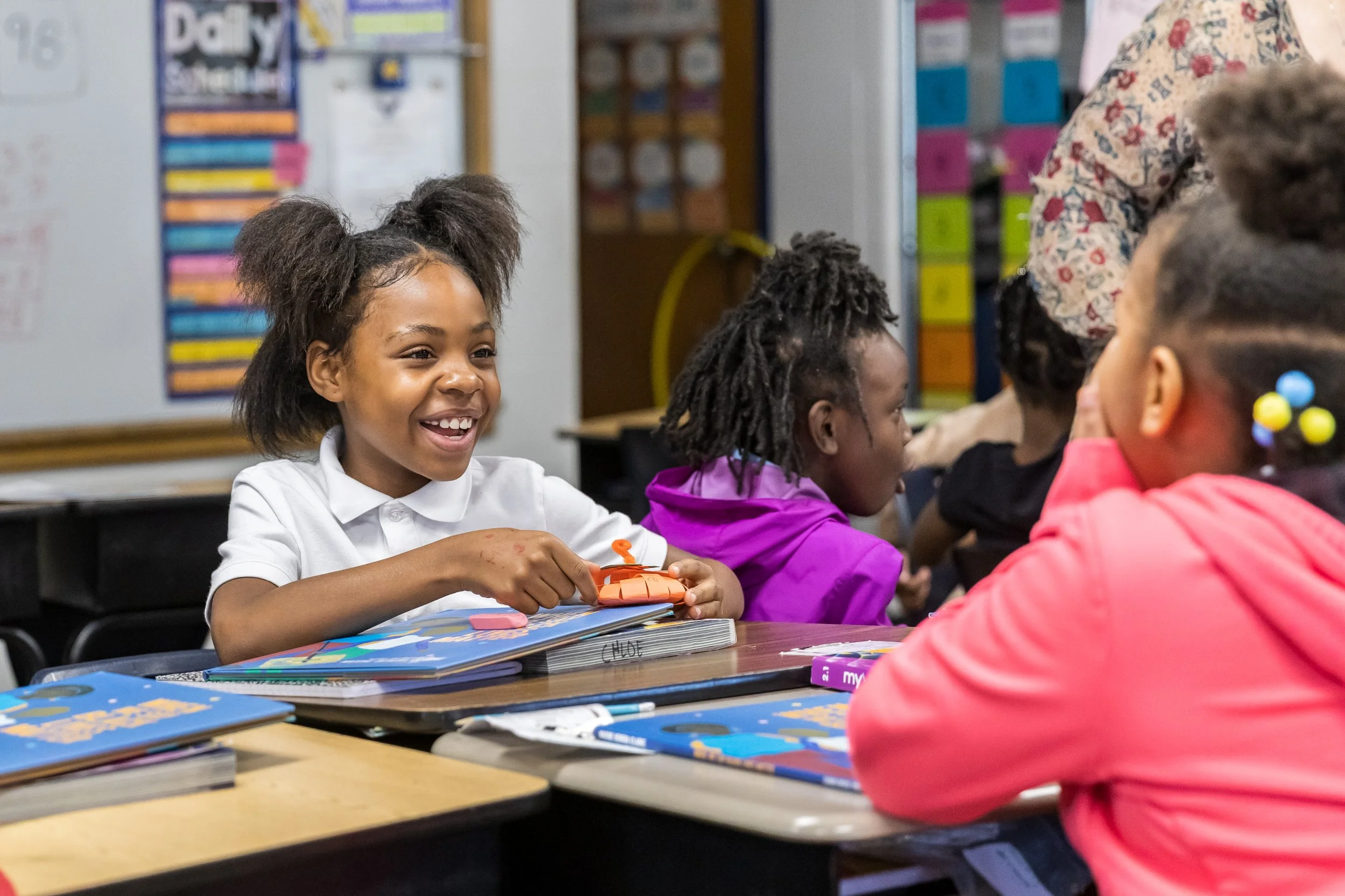
PreK-8th Grade Literacy
Investments in Early Childhood Education (ECE) are essential to ensuring students and families are equipped with standards-based college and/or career-ready skills, exposures, and resources to successfully transition to and from the post-secondary destination of their choice.
-
PreK-8th grade literacy programming is currently being implemented across St. Louis area public schools.
Programming includes:
Early Childhood Professional Development
Home Libraries
-
Early childhood professional development opportunities build upon educators’ pedagogical knowledge of K-5 readiness standards to advance literacy development. Educators attend informative training sessions and carry learnings forward into their daily instruction. Key elements of trainings include phonics-based instruction, play-based learning, and rapport-building strategies.
STLEdFund Footprint: Approximately 1,800 students annually
-
The Home Libraries program is a joint-literacy initiative to optimize reading and extend learning beyond the schoolhouse for St. Louis area public schools scholars. Through this program, PreK-8th grade scholars are provided books, programming, and incentives that encourage their excitement for reading.
STLEdFund Footprint: Approximately 1,200 students annually